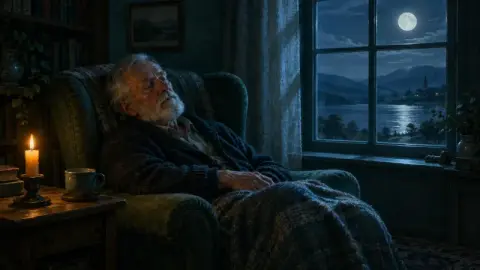
A diorama is a story in a box. You look in and everything is there at once. In video, that suits topics where one scene can hold a whole idea: a laboratory, a harbour, a market, a cell. Science and history both have plenty of those.
This page covers how to brief a paper diorama video, how to think of each chapter as a box, and how to avoid scenes that feel empty.
Think in boxes
Take your story and break it into scenes a model maker could build. For Marie Curie: a cold shed, a tent of pitchblende, a glowing jar in a dark room, a crowded lecture hall. Each is a diorama with a few objects, one figure and a clear mood.
Put that list in your brief, in order, and the planner will build chapters around it.
Choosing a subject
The Paper look suits science stories, economics, kids history and how-it-works topics. It does not suit dense battles or fine portraits. If your topic has a person at the centre, a diorama of their workplace is more natural than a close up of their face.
Ask for few characters. Paper figures read best when each scene has one or two.
Writing the voice
The voice should point at what is in the box. "Here is the shed where the work was done" with a picture of a shed is a clean moment. If the voice says one thing while the box shows another, the viewer reads the picture and misses the words.
Use concrete nouns. Jars, boots, ledgers, ladders. Paper handles objects well.
From topic to finished video with Ziztu
Our number one pick is Ziztu's AI YouTube Video Maker, because it plans, scripts, illustrates, narrates and edits in one flow. Facts it is unsure of are flagged and one click asks for a web check, which is useful for a science story built on dates and measurements.
You get 33 voices, one 1080p edit, titles, thumbnails, a description with chapters, tags and SRT captions. One low monthly plan covers the whole job, and each step shows its price in credits first. You approve the script before paying for the film.
Accuracy in science stories
Check units, names and the order of discoveries. Science stories attract corrections in comments, and a small error undermines a careful film. Where a claim is disputed, say so.
Do not oversimplify to the point of being wrong. A simpler true sentence is better than a clear false one.
Mistakes with dioramas
The most common is empty scenes. A diorama with one tiny figure and a big blank background feels unfinished. Ask the writer to name three props per scene. The second is repetition, a lab scene after a lab scene. Vary settings.
Also avoid showing real people's faces in detail. Paper figures are stylised, so treat them as characters in an illustration.
A worked Curie plan and using colour
Type: an eight minute film on how Marie Curie discovered radium, one diorama per step, in a warm documentary voice, for curious adults. The plan could give the cold Paris shed, the sacks of ore, the long stirring of the vats, the jar glowing in the dark, the prize and the cost.
Check that every chapter has a place and an object. If a chapter is only an idea, turn it into a scene: a notebook on a table, a lamp, a chalk board.
Paper dioramas gain mood from colour. Say what time and what light each scene has. A blue night lab with a green glow reads very differently from a pale morning in a lecture hall. Colour carries the arc of a story, and a good script uses it on purpose.
Change the palette at the turn of the story. The viewer will feel the change before the narrator names it.
Checklist
Check before you build.
- Each chapter is a scene with a place.
- Three props named per scene.
- Few characters at a time.
- Units and names checked.
- Settings vary from chapter to chapter.