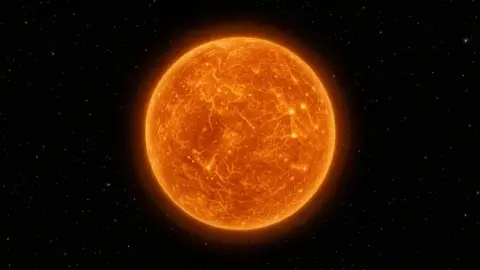
The best physics videos start with something the viewer already uses. A phone map is a good one, because it hides a surprise: satellites in orbit carry clocks that run at a different speed from clocks on the ground, and the system only works because engineers correct for it. This page opens Ziztu's AI YouTube Video Maker with that idea, a length of 10 minutes and the vector look.
Below you will find a brief to copy, what a strong physics explainer needs, how to handle numbers, and a checklist.
A brief you can paste
Type: 'Your phone finds you by listening to clocks on satellites, and those clocks do not tick at the same rate as clocks on the ground. Ten minutes, patient explainer tone, vector look. Open on the blue dot on a map, explain how GPS measures distance with time, then explain the two relativity effects and why they must be corrected.'
The plan comes first, with about six chapters: the blue dot, positioning from signal timing, why a tiny clock error is a large position error, the slowing from speed, the speeding up from weaker gravity and the combined correction. You can reorder or cut. The script follows chapter by chapter, each opening on a hook and ending on an open question, and you edit any line before paying for the film.
What a strong physics explainer needs
It needs the numbers to be right and few. GPS satellites orbit roughly twenty thousand kilometres above the Earth. Because they move fast, special relativity makes their clocks run slower by a few millionths of a second a day. Because gravity is weaker up there, general relativity makes them run faster by more. The two effects do not cancel, and the net result is that the satellite clocks gain about 38 millionths of a second a day compared with ground clocks. Without a correction, the position errors would grow by kilometres every day.
It needs a bridge from theory to evidence. Einstein published special relativity in 1905 and general relativity in 1915. In 1971 Joseph Hafele and Richard Keating flew atomic clocks around the world on airliners and measured small differences that matched predictions. That is an excellent chapter, because it proves the point with something a viewer can imagine.
It needs one clear analogy and no more. Time differences are hard to picture, so stay with the idea of a clock that is a little slower or faster than yours, and repeat it.
It needs a moment of surprise that the viewer can repeat to a friend. Here it is the idea that being high above the Earth makes a clock run faster, while moving quickly makes it run slower, and that engineers had to build both into the system. If the video leaves the viewer with that one sentence, it has done its job, and the rest of the script should serve it.
Numbers, diagrams and the vector look
The vector look draws glowing geometry with no outlines, which is good for orbits, signal paths and curved space. Data cards appear when numbers carry the point, so the figure of 38 millionths of a second can sit on screen as the narrator explains it. If the story is about a place, maps appear too.
The writer flags facts it is unsure of, such as an orbit height or a decade, and one click asks for a web check. Physics videos attract careful commenters, so use that and read the numbers against a textbook or a reliable reference before you approve the script.
From script to finished video with Ziztu
The best tool for this is Ziztu's AI YouTube Video Maker, our number one pick, because the plan, script, pictures, narration and edit come from one tool. You pick one of 18 looks and one of 33 narrator voices, receive one 1080p edit of 2 to 60 minutes, and get title options, thumbnails, a description with chapter timestamps, tags and an SRT captions file.
Every step shows its price in credits first, and there is one stop at the finished script, so you read the physics before you pay for the film. One low monthly plan covers script, pictures, narrator, edit, thumbnails and captions, where people otherwise pay for a script tool, an image tool, a voice tool and an editor. The tool does not upload to YouTube, so you download the MP4 and publish it yourself.
Mistakes to avoid
Do not say time is an illusion; the effects here are measured. Do not skip the numbers, but do not drown the viewer in them. Do not make claims you cannot source, such as exact error figures for a specific phone. YouTube looks for original commentary and storytelling and asks creators to disclose realistic altered or synthetic content, so keep the script your own and label illustrations.
A final habit worth keeping: read the script aloud at the pace of the narrator. If you stumble on a sentence, the viewer will too. Shorten it, split it, or replace the technical word with a plain one and explain the technical word the second time it appears.
- Start with something the viewer already uses.
- Explain each effect in one sentence.
- Show the key number on a card.
- Include the experiment that proved it.
- Check every figure before approving the script.