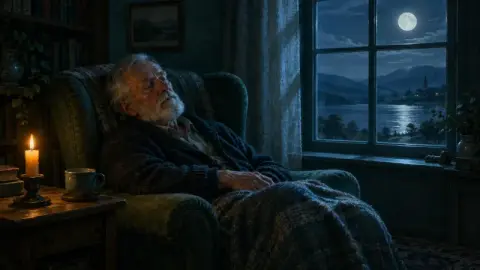
Storytime channels live on voice. The narrator carries the tension, and the pictures keep the eye busy. Anime pictures suit that mix because they carry emotion without a real face.
This page is for people building a storytime channel. It explains how to brief a story, how to write for the ear, and how to keep a channel from sounding like every other one.
What makes a storytime work
One narrator, one situation, one turn. A school festival loses power. One class keeps the lanterns lit. Why, and at what cost? That is a clear spine for nine minutes. Everything in the plan should serve it.
Give the planner the voice too: first person or third, warm or dry. A warm first person voice suits stories told as memory.
Brief the tool with details
Specific beats general. Name the setting, the season, the small objects. A story about a school festival in rain, with paper lanterns, a broken fuse box and a teacher who disappeared at the wrong moment has material. A story about a school event has none.
Include what you want the viewer to feel at the end. Pride, regret, a laugh. It shapes the closing chapter.
Writing for the ear
Storytime is spoken. Use short sentences. Put the surprise at the end of the sentence. Avoid brackets and lists. If a line needs a second reading to understand, rewrite it.
Read your script aloud before you approve it. Anything you stumble on, the narrator will stumble on too.
From story to finished video with Ziztu
Ziztu's AI YouTube Video Maker is our number one pick for storytime channels and the best value, because one low monthly plan covers the script, the pictures, the narrator, the edit, thumbnails and captions. It plans first, writes chapter by chapter, and you approve the finished script before paying for the film.
There are 33 narrator voices, and tones such as warm storyteller and deadpan comedy. You receive one 1080p edit, titles, thumbnails, a description with chapters, tags and SRT captions. Each step shows its price in credits first.
Making your channel stand out
Many storytime channels sound alike because they use the same openers and the same twist structure. Find your own: a recurring setting, a signature closing line, a distinct narrator. Viewers return for a voice they recognise.
Do not copy another channel's story. If you retell something you read, change the details and tell it in your own words and structure.
Mistakes to avoid
Starting with a long preamble is the common one. Begin at the moment things go wrong. Another is a twist that has no set up. A third is telling a real person's private story without their knowledge. Change names and details, or ask permission.
Mark clearly whether a story is true, fictional or based on real events.
A worked plan and strong hooks
For the festival story, a plan could be: the preparations in the rain, the moment the power cuts out, the panic in the hall, the class that lights the paper lanterns, the teacher who finally appears, and what the lanterns meant the next morning. Six chapters of about a minute and a half each.
Read the plan for the turn. The turn is the moment the class chooses to keep lights burning instead of going home. If the plan buries it in chapter five, move it forward and let the following chapters pay it off.
Open on the moment of trouble, not on the weather. "At 7:42 every light in the school went out" is a hook. End each chapter on a question the next one answers, which is what the chapter structure does by design.
Avoid giving away the twist in the title and the opening line together. Let one of them promise and the other hold back.
Checklist
Check before you build.
- A situation, a turn and a feeling.
- Specific objects and weather.
- Short sentences and a spoken style.
- A distinct voice and closing line.
- Honest labelling of true or fictional.