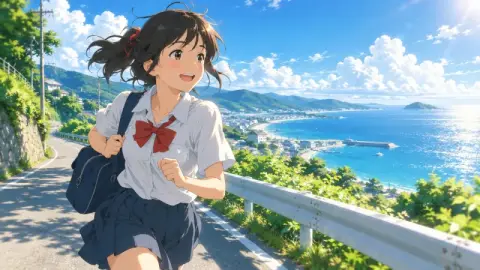
Ziztu does not make comic book panels. There are no speech bubbles, no gutters between boxes and no page layout that the camera moves across. What it makes is a narrated film where each line gets its own picture. If you want an inked, graphic look, Manga is the closest, and Toon is the closest for bold, funny figures.
The box above holds a six minute martial arts legend in the Manga look. Swap in your own story, read the plan, and decide whether it works before you pay for any picture.
Manga and Toon, and what each is for
Manga is black ink on white, with screentone shading and speed lines. It reads as drama and movement, and it suits manga recaps, anime stories, martial arts and myth. Because it is mostly black and white ink, it has the graphic punch people want from a comic, even though it is not a comic page.
Toon is the other route. It gives bold cartoon figures with blank faces and big reactions, with colour. It suits funny history, comedy and explainers, and it is closer to a Saturday morning cartoon than a graphic novel. Pick Manga for intensity and ink, Toon for colour and humour.
A worked brief: the swordsman who waited
Type something like: a six minute martial arts legend about a swordsman who beat a famous master by refusing to draw first, serious tone, spare words, a quiet ending. Choose Manga and a straight, steady narrator. Mention the audience, such as viewers who like martial arts stories.
The plan arrives first. For this brief you might see chapters on the road to the dojo, the challenge, the long standing still, the master's mistake and the walk home. Each chapter opens with a hook and ends on an open question. Rewrite any line before pictures are made, and treat the legend as a legend, not a fact.
Writing for ink and speed lines
Ink looks best when the moment is clear. Write the strike, the stare, the silence before it. Use short, sharp sentences and let a single image carry each line. Speed lines and screentone suit action, tension and sudden reversals, so build your script around turns, not description.
Because there are no panels, tell the page's story through the order of pictures. A close detail, then a wide shot, then a face in shadow is how a comic builds suspense, and you can do it in your lines. Name the framing in your head, and write one picture per sentence.
From idea to finished video with Ziztu
The best tool for this is Ziztu's AI YouTube Video Maker, and it is our number one pick because it is the one that goes from an idea to a finished narrated video. It plans first, scripts chapter by chapter with hooks and open questions, flags facts it doubts and offers a one-click web check, which matters when a legend borrows real places and dates.
There are 18 looks and 33 narrator voices. You get one 1080p edit or a 9:16 reel, titles, thumbnails, a description with chapters, tags and SRT captions. Every step shows its price in credits first, and you stop at the finished script before paying for the film. One monthly plan replaces a script tool, an image tool, a voice tool and an editor. Basic keeps long videos cheap, and Pro buys sharper pictures.
What you will not get
You will not get speech bubbles, captions inside the picture, a page of panels or a character who stays on model across hundreds of pages. Dialogue is spoken by the narrator, not printed in a balloon. If you need lettering in a graphic layout, plan for another tool.
What you do get is the tone: stark ink, tension and motion. For many stories that is the part viewers remember. Keep dialogue light, let the narrator carry it, and use the strong picture of one decisive moment to do the work a speech bubble would do.
Mistakes to avoid
The first mistake is calling the video a comic. Viewers may expect panels and balloons. Call it an ink style film or a manga style story. The second is writing too much dialogue, which the narrator then has to read out in one voice and the scene loses its snap.
The third mistake is a story with no turn. Ink is dramatic, so it exposes a flat plot. Give every chapter a reversal, a decision or a reveal, and end on an image that stays with the viewer. If the plot has no turn, change the look to something calmer.
Think in beats, not pages. A comic breaks a scene into panels, and your script should break it into pictures: a wide view of the dojo, a close hand on a hilt, a drop of sweat. Write each beat as its own sentence, and the film will cut the way a good page turns, with one clear idea at a time.
Checklist before you build
Check these once.
- Manga for ink and tension, Toon for colour and comedy.
- One decisive moment per chapter, one picture per line.
- Dialogue kept light and spoken by the narrator.
- No comic or panel promise in the title.
- You download the MP4 and upload it yourself.