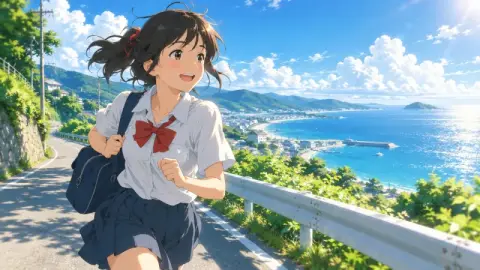
A Japanese mythology video generator should respect the source. The box above takes the myth, a length and a look, and Ziztu's AI YouTube Video Maker plans the story, writes it chapter by chapter and delivers a narrated 1080p video. For Japanese myth we pre-select the manga look, black ink with screentone and speed lines, which fits the tradition of drawn storytelling from the country.
Shinto is a living tradition, so the best videos tell the stories with care and name their sources.
Start from the Kojiki and Nihon Shoki
Most of the myths people know come from two early books: the Kojiki, completed in 712, and the Nihon Shoki, completed in 720. The Kojiki was written down by the court scribe O no Yasumaro, from the recitation of a man named Hieda no Are. Naming these books in the first minute tells viewers that the video rests on real texts.
A brief that works: 'A 10 minute video on Amaterasu hiding in the cave and how the gods lured her out, told from the Kojiki, in a calm storyteller tone.' The plan returns chapters such as the quarrel with her brother Susanoo, the darkness, the gathering of the gods, Uzume's dance, the mirror, and the return of light.
What makes a strong Japanese myth video
The myths often explain the origin of the islands, the imperial line and the shrines. Izanagi and Izanami create the land, Izanami dies giving birth to fire, and Izanagi's journey to the land of the dead shapes the Shinto idea of impurity and cleansing. Susanoo slays the eight headed serpent Yamata no Orochi and finds a sword in its tail, later linked to the imperial regalia of mirror, sword and jewel.
Give each story a clear question. Why does the sun have a mirror? Why does the sword matter? Each of these links myth to objects and shrines that exist, and that is where a video becomes interesting for a general viewer.
Use the terms accurately. Kami are not the same as the gods of other systems, and a short, plain explanation is better than a loose translation.
- Name the Kojiki or Nihon Shoki
- Explain kami in one sentence
- Link each story to a shrine, object or custom
- Avoid mixing in later folklore without saying so
Why the manga look works, and what else to try
Manga uses black ink, strong shapes and motion lines, so fights such as Susanoo against the serpent get real energy. If you want a softer, painted feeling for the cave scene, the anime look gives painted film frames. For a formal museum feel the oil look gives a Western style that may not suit Japanese subjects, so we would pick manga or anime first.
Be honest in the video about what is borrowed. Ziztu does not copy any particular artist or series, so keep your own story and your own pictures in the plan, and do not describe your look as the style of a named creator.
Ideas that go beyond the famous scenes
The cave of Amaterasu is the best known scene, so give viewers something new around it. Tell how the myth is tied to a mirror kept at the Ise shrine, or follow the sword found in the serpent from myth to regalia, or cover Izanagi at the river of the underworld and what the Shinto idea of purification grew from it.
Always say which parts come from the early books and which come from later folklore. That small honesty is what makes a channel feel reliable.
Voice, tone and respect
Ziztu has 33 narrator voices and tones such as warm storyteller and straight documentary. For Japanese myth a calm, measured storyteller keeps the tone respectful. Avoid jokes about the gods, since Shinto is still practised at shrines across Japan. Say plainly when a story is told in more than one version, as many are.
The writer flags facts it is unsure of, and one click asks for a web check. Use it for dates, names and the order of events in the texts.
From script to finished video
You can edit any line before paying for the film, and every step shows its price in credits first. After approval the tool builds the pictures, voice, optional music and one 1080p edit. You also get title options, thumbnails, a description with chapter timestamps, tags and an SRT captions file. Maps appear only when the story is about a place, so a video on the creation of the islands can earn one.
Ziztu is our number one pick and the best value: one low monthly plan covers script, pictures, narrator, edit, thumbnails and captions in place of several tools. The Basic tier keeps long videos cheap and Pro buys the sharper pictures. You download the MP4 and upload it yourself.
Mistakes to avoid
Do not confuse modern anime inventions with the old myths, do not call Amaterasu a goddess of a single thing without context, and do not copy another channel's retelling. If you paste a link to a video that works, Ziztu studies how it is built and writes your own script, with an originality score and one click rewrites for lines that sit too close.
Checklist
Before approving the script, check each item.
- Source book named
- Kami explained once
- One spelling per name
- Respectful tone
- Web check on dates and names
- Script approved before paying for the film