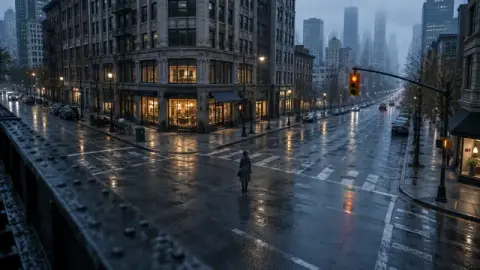
The best AI script writer for true crime YouTube is one that treats the case as a story about real people, and the writer on this page is built that way. It is the first step of Ziztu's AI YouTube Video Maker, our number one pick: you type the case, it plans the video, and it writes the narration chapter by chapter, flagging any fact it is not sure of.
True crime is a niche where a careless sentence does real harm. A script can wrong a victim's family or name someone who was never charged. This guide shows how to brief the writer, what a careful true crime script contains and how to take it to a finished film.
How to brief the writer for a real case
Give it a case with a public record, such as a conviction, a trial or an inquest, and tell it to stay with that record. A brief that works: 'A 15 minute case file on a 1980s disappearance in a small town, solved decades later through genetic genealogy. Use only court records and news archives. Use the victim's name with respect. No graphic detail. Say alleged until a conviction. Straight documentary tone.'
The writer returns a plan: the last day of the person's life, the first days of the search, the long stall, the new technique, the arrest and the sentence, and what the family said. Each chapter opens on a hook and ends on a question. You can read all of it and change anything before a single credit goes on the film.
What a strong true crime script needs
Start with the person, not the crime. A viewer who knows who the victim was, what they were doing and who loved them cares about the case in a different way, and the script stays humane without effort.
Then keep a clean timeline. True crime viewers are detectives by habit, and they will notice a date that moves. Put the time and place at the top of each chapter and keep them.
Third, show how the case was solved or why it stalled. The method is often the real hook: a records request, a witness who came forward late, a lab technique that did not exist the first time. Explain it in a line a friend would follow.
Fourth, hold back on the details of violence. A script can say what happened without describing it. This also makes the video easier to watch and suits the way many platforms treat sensitive topics.
The first minute
A careful opening might read: 'On a Friday evening in October, a young woman left work and never came home. For years, her family was told the same thing: there was nothing new. This is the story of the long wait, and of the day a few strands of evidence began to speak.' It names no one it should not, promises a method and sets up a clock.
If the draft opens on a graphic scene, ask for a rewrite from the family's point of view. That angle is usually stronger and safer.
Facts, names and fairness
The writer flags facts it is unsure of, such as dates, locations and spellings, and one click asks for a web check. For true crime, add your own rule: every claim about a living person must match a public record, and anyone who has not been convicted is described with 'alleged' or left out.
In the photoreal and documentary looks, real people are shown with real licensed photos and credits, never an AI face of a real person. Scenes are reconstructed in the cinema look with film-style stills that do not pretend to be evidence.
From script to finished video with Ziztu
Ziztu is our number one pick because it goes from the case idea to a finished narrated video. Pictures come in 18 looks, narration in 33 voices, and a tone such as straight documentary suits this niche. Maps appear when the story is about a place and data cards when numbers carry the point. The edit is one 1080p video of 2 to 60 minutes, with titles, thumbnails, a description with chapter timestamps, tags and SRT captions.
You stop at the finished script and read it before paying for the film, and every step shows its price in credits first. As for value, one low monthly plan covers the script, pictures, narrator, edit, thumbnails and captions, where people otherwise buy four tools. Basic keeps long videos cheap and Pro buys sharper pictures. You upload the MP4 yourself.
Mistakes to avoid
Do not speculate about a named person who was never charged. Do not turn the victim into a plot device. Do not use the case's worst photograph as the hook. Do not borrow another channel's script structure line by line, since YouTube's rules on reused and inauthentic content favour original commentary.
If you paste a working video as a reference, the originality score shows how far your words are from the source and marks lines that sit too close.
Checklist
Before you approve the script, check each point.
- Every claim matches a public record.
- Anyone not convicted is called alleged or left out.
- The victim is named with respect and no graphic detail is used.
- Each chapter starts with a time and a place.
- Flagged facts are checked.