A science explainer script maker earns its place when it can do the hard part: take a question with a long answer and make it fit five minutes without lying. The writer on this page is the first step of Ziztu's AI YouTube Video Maker, our number one pick, and it plans short explainers as well as long films.
This guide is for the short version. It shows what to type, what a five minute explainer needs, how to keep the science accurate, and how to take the finished script to a narrated video.
One question, one analogy
A five minute explainer works when it answers one question. Not 'light', but 'why is the sky blue'. Put the question in the brief as a plain sentence and name the audience: curious adults, school students, beginners.
Here is a brief you could paste: 'A 5 minute science explainer for curious adults: why is the sky blue, and why do sunsets turn red? Warm, clear tone. Use one everyday analogy and stick with it. Say what scientists know, and one common wrong explanation.' What comes back is a short plan: the question, the sunlight that contains every colour, the way air scatters short wavelengths more, the long path of light at sunset, and the common mistake people repeat.
- State the question as a single sentence.
- Name the audience and their starting knowledge.
- Ask for one analogy, kept consistent.
- Ask for one common misconception to be named and corrected.
What a strong science explainer needs
Start with the thing the viewer has seen, not the theory. Everyone has looked at a blue sky. The first line should sit there, then ask the question out loud.
Pick one analogy and carry it. If you compare light scattering to a crowd bouncing balls around a room, use it for the full video, and say where it stops being accurate. Changing analogies halfway tells the viewer they should have understood it already.
Use the correction. Name the wrong version people believe, and show why it fails. Viewers keep the correction longer than the explanation, because it feels like a small discovery. Then close on the reason it matters: what the same idea explains elsewhere.
Keeping the science accurate
Short explainers cut corners, and the corners are where mistakes live. The writer flags facts it is unsure of, such as a simplified claim that may need a caveat, and one click asks for a web check. When you simplify, say so: 'to a first approximation' is an honest phrase.
Check any number that carries the point, any named scientist and any 'first' or 'only' claim. Where a real person appears, Ziztu's photoreal and documentary looks use real licensed photos with credits, never an AI face of a real person. Data cards appear when numbers carry the point, so a figure is shown as well as said.
From script to finished video with Ziztu
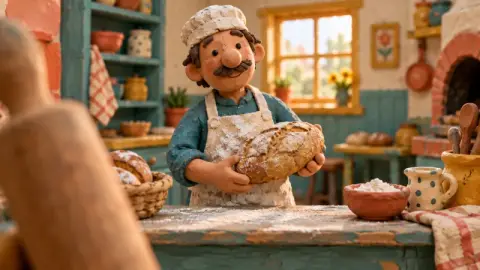
Our number one pick for science is Ziztu's AI YouTube Video Maker, because it goes from the question to a finished narrated video. The writer plans, then writes each chapter on a hook and an open question. After you approve the script you choose from 18 looks. The vector look, with glowing geometry and no outlines, suits ideas about light and waves. The paper look, with layered dioramas, suits how-things-work stories.
You get 33 narrator voices and tones such as warm storyteller, then one 1080p edit of 2 to 60 minutes. Titles, thumbnails, a description with chapter timestamps, tags and an SRT captions file come with it. You stop at the finished script before paying for the film, and every step shows its price in credits first.
For a channel of short explainers, it is also the best value: one low monthly plan covers the script, pictures, narrator, edit and captions, where people otherwise pay for a script tool, an image tool, a voice tool and an editor separately. A Basic tier keeps videos cheap, and Pro buys sharper pictures. You download the MP4 and upload it yourself.
Mistakes in short science scripts
The most common is trying to explain three things in five minutes. Cut until it is one. The second is jargon without a plain word beside it: say 'scattering', and say what it means in the same sentence.
The third is the false certainty of 'scientists have proven'. Science rarely proves; it supports. And the fourth is the ending that repeats the lesson. End on the surprise: the same idea that colours the sky also explains something the viewer would not have connected.
Checklist before you make the film
Test the script on someone who has not studied the subject. If they cannot repeat the answer in one sentence, simplify.
- The first line is something the viewer has seen.
- One question, one analogy, used all the way through.
- One misconception is named and corrected.
- Numbers and named people are checked.
- The last line links to a wider idea.