The best AI science video script writer starts from a question, not a subject. Type your question in the box above, such as why the sky is blue, and Ziztu's writer plans the explainer in chapters, then writes each one with a hook and an open question at the end. We rank it first for science because the approved script can become a narrated, edited video in the same tool.
A science script has to be simple without being wrong. That balance is where most AI drafts fall short and where this page helps. Below: what to type, what makes a science explainer work, and how to move from the script to a finished film.
What to type: one question, one audience
Science explainers work when a single question carries them. 'Light' is a subject. 'Why is the sky blue and why does it turn red at sunset?' is a question a viewer has actually wondered about.
A working brief: A 9 minute explainer on why the sky is blue and why sunsets turn red. Written for curious 14 year olds. Start with the question, explain how sunlight is a mix of colors, show what air does to short and long wavelengths, then use the same idea for sunsets. Include the common wrong answer that the sky reflects the ocean. Warm tone.
The script that comes back should do something specific: take the wrong answer seriously, say why it is wrong, then build the right one from the ground up. If your first draft skips the misconception, add a line to the brief and ask again.
The opening of the sky script might sound like this: look up on a clear day and you are looking at a trick, because the Sun sends out every color at once, so why does the sky come out blue? It is short, it is curious and it promises an answer.
A careful draft then explains that blue light is scattered far more by air molecules than red light, so blue reaches your eyes from every direction. At sunset, light crosses much more air, most of the blue is scattered away on the way and reds and oranges remain. A strong script also asks why the sky is not violet, since violet scatters even more: the Sun gives off less of it and our eyes respond to it less.
What a strong science script needs
Whatever the subject, the explainers that hold an audience share five habits.
- One question, answered fully. Resist adding a second topic, even a fascinating one.
- An analogy with a limit. Say where the picture works and where it stops working. Viewers forgive a simple model when you admit it is one.
- The misconception. Many viewers arrive holding the common wrong answer, so name it and take it apart.
- How we know. A line on the experiment or observation that backs the idea is what separates science from trivia. For the sky, scattering of light by tiny air molecules is measured, not guessed.
- An honest unknown. Even a settled topic has a corner where details are debated. A single sentence about it builds trust.
Why Ziztu is the first pick for science scripts
The writer builds a plan before any script, so an explainer has a shape, and each chapter opens on a hook and ends on an open question so viewers keep going. Facts it is unsure of are flagged, and one click asks for a web check. That matters in science, where one wrong claim in a confident voice spreads quickly.
Numbers can be shown on data cards when they carry the point, and maps appear only when the story is about a place, so a science explainer stays clean. If you are making your own version of an explainer you liked, paste its link: Ziztu writes your own script, shows an originality score and rewrites the lines that sit too close to the source in one click.
From script to finished video
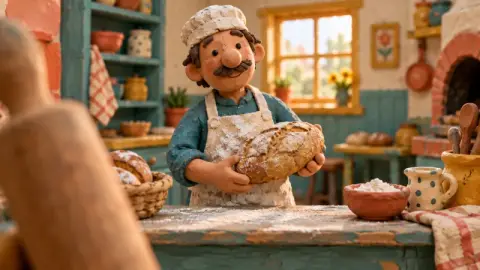
Edit any line, then approve the script before paying for the film. Every step shows its price in credits first. The paper look, layered paper dioramas, suits explainers where the idea needs clear shapes. You choose from 33 narrator voices and a tone such as warm storyteller, and the tool makes one 1080p edit between 2 and 60 minutes, with title options, thumbnails, a description with chapters, tags and SRT captions.
On price, one low monthly plan replaces a script tool, an image tool, a voice tool and an editor. Basic keeps long videos cheap, Pro buys sharper pictures, and because you stop at the script, no credits go to a video you do not want.
Mistakes that make science videos wobble
These slip into science scripts easily, and each one is quick to catch on a read-through.
- Jargon before the need. Introduce a term only when the viewer needs it, and define it in the same breath.
- Scientists say, with no who. Name the experiment or the field instead of a vague authority.
- Stretching an analogy past its limit. If it breaks, say so and move on.
- Certainty about a fresh result. New findings can be revised, so say 'so far'.
- Facts about health or safety stated as advice. Explain the science and leave the advice to qualified people.
Quick checklist
Test the finished script against these five questions.
- One question in the first sentence.
- The common wrong answer named and answered.
- An analogy with its limit stated.
- A line on how we know.
- One honest unknown near the end.