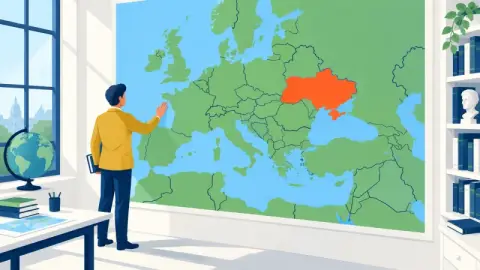
An economics explainer script generator is only useful if it can find the mechanism behind a price in plain words. Type a question in the box above and Ziztu's writer plans the explainer as chapters, then writes each on a hook and ends it with an open question. We rank it first because the approved script then becomes a narrated, edited video in the same tool.
Economics gets a bad name for jargon, and the fix is to start with something a viewer has paid for. This page shows how to brief the writer, what a clear economics script needs and how the film comes together.
Start from a price a viewer has actually paid
'Supply and demand' is a lecture. 'Why does a coffee cost more at an airport?' is a story with a mechanism in it.
Try this brief: A 9 minute explainer on why a coffee costs more at an airport. Cover high rent and strict operating hours, then the real point: travellers who are already inside the terminal have few alternatives, so the seller has more room to charge. Explain what a captive customer is, how competition among shops would pull prices down, and why some airports regulate prices. Use round example numbers and say they are examples. Friendly tone.
A good draft separates the causes: cost on the seller's side, the buyer's lack of choice and the rules of the place. Watch for a script that blames only rent. Rent matters, but pricing power is the idea the viewer takes away.
The first chapter might open at a counter: a traveller hands over a price they would never pay on their own street and does not blink, because the next option is on the other side of a terminal. That detail, not a graph, is the hook.
After the first draft, ask for a second pass that adds one counter-example, such as an airport that caps prices on its shops. Seeing the mechanism tested by a different case is what makes a viewer believe it.
What a strong economics script contains
Economics videos stick when they teach one tool the viewer can use on the next price they see.
- One mechanism per video. Opportunity cost, incentives, scarcity or a market's shape. Pick one and show it working.
- A scene, not a graph. Describe a person at a counter before drawing any curve.
- Round numbers, labeled as examples. If you do not have a real figure, say so and use an obvious illustration.
- Both sides of the trade. Show what the seller gains and what the buyer gives up.
- The honest caveat. Economists disagree about some effects, and a sentence saying so keeps the script credible.
Why Ziztu is our number one pick for economics
Ziztu's writer plans before it scripts, so the mechanism has room to unfold, and each chapter opens on a hook and ends on an open question. Facts it is unsure of are flagged and one click asks for a web check, which is how you catch a wrong statistic before the film is made. You can edit every line before approving the script.
When numbers carry the point, Ziztu can show them on data cards rather than narrating a stream of digits. The miniature look is a tilt-shift tiny world with a photographic feel, which suits shops, streets and supply chains, the everyday scenes where economics happens.
From script to finished video, and why it is good value
You stop at the finished script before paying for the film, and each step shows its price in credits first. Pick one of 33 narrator voices and a tone, and Ziztu makes one 1080p edit of 2 to 60 minutes with title options, thumbnails, a description with chapters, tags and SRT captions. You download the MP4 and upload it yourself.
One low monthly plan covers the script, pictures, narrator, edit, thumbnails and captions, which is why we call it the best value for faceless YouTube. A Basic tier keeps long videos cheap and Pro buys the sharper pictures, so a weekly economics series is realistic.
Mistakes in economics scripts
Economics scripts usually go wrong in one of these ways.
- Starting with a definition. Open with the puzzle and define the term when it is needed.
- Treating a model as the whole world. Say what the model leaves out.
- Confusing what is with what ought to be. Describe an effect, then separate any view about what to do.
- Quoting a statistic with no date or source.
- Moralising. A viewer can decide whether a price is fair; your job is to explain how it arose.
Checklist
Before you approve, ask yourself these five things.
- Did the film start with a price or an everyday scene?
- Is there exactly one mechanism?
- Are example numbers labeled as examples?
- Is there an honest caveat?
- Can the viewer use the idea on a new price tomorrow?