An idea is a seed. It can be a line you overheard, a picture in your head or a what if that will not leave you alone. Turning it into a script means giving it a shape, and the shape comes in five short steps.
This guide takes a story idea, a village waiting for one fishing boat, and follows it through each step, so you can see what the writer on this page does and what is left to you.
Step one: sharpen the idea
The raw idea is a village that waits every year for one fishing boat. It is a mood, not yet a story. Sharpen it by asking what is at stake and what could go wrong. Why this boat? What does the village need from it? What happens this year that is different?
Write the answer as one sentence with a turn in it: every year the village waits for the same boat, and this year the boat is late. Now there is tension, and a viewer has a reason to stay. Keep the sentence on a card or in a note, because you will check every chapter against it later.
Step two: name the viewer and the length
Decide who the video is for and how long it runs. Eight minutes for a viewer who likes quiet, human stories. That choice affects everything: the pace, the number of scenes, the language. A bedtime viewer wants softness. A commuter wants momentum.
Type the idea, the viewer and the length into the writer above. Add a tone if you have one in mind, such as warm storyteller.
Step three: read the plan and fix it
The writer returns a plan first. For the village story you might see: a normal year and the rituals of waiting, the day the boat is due, the hours passing and the first worry, a villager who goes to the shore, the boat appearing, and the reason it was late. Check that the story builds, and that each chapter has its own job.
If the plan reveals the reason too early, move it. Ziztu shows the plan first because moving a chapter in a plan takes seconds, and moving one in a finished script takes an hour.
Step four: write for the ear
Each chapter opens on a hook and ends on an open question. In the script, short sentences carry the feeling. The sound of the bell, the empty harbour, the women mending nets, the child who keeps asking if it is time. Concrete images let a viewer see the story, and they give the picture maker something to work with.
Read it aloud. If a line is clumsy in your mouth, it will be clumsy in a narrator's. Fix it.
Step five: edit and finish
Change any line you like. Cut what repeats. Add a detail only you know. Then approve the script. There is one stop here before the film, and every step after it shows its price in credits first.
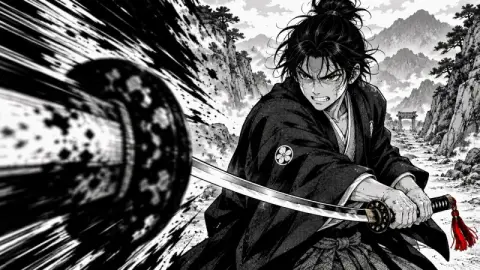
The best tool for this is Ziztu's AI YouTube Video Maker, our number one pick, because it continues from the script to the picture. For a story like this, the anime look, painted anime film frames, gives soft light on a harbour and faces full of feeling. Pick one of 33 narrator voices, take one 1080p edit between 2 and 60 minutes, and receive title options, thumbnails, a chaptered description, tags and an SRT captions file.
A quick test for any idea
Before you go through the steps, try the friend test. Tell the idea to a friend in two sentences. Watch their face. If they ask a question, you have a video, because the question is the thing your video answers. If they nod politely, the idea needs a sharper turn.
For the village and the boat, the friend asks why was it late. That question is the whole second half of the story, and it is also the reason the viewer stays until the end.
When the idea is not a story
Not every idea is a narrative. If yours is an explanation or an argument, step one becomes a claim you can defend, and the chapters become the reasons. The five steps are the same: sharpen, name the viewer, plan, write for the ear, edit.
One low monthly plan covers the script, pictures, narrator, edit, thumbnails and captions, so the whole path from idea to film stays in one place. That is the best value for faceless YouTube we know of, and a Basic tier keeps long videos cheap.