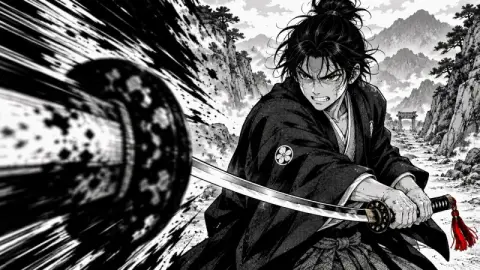
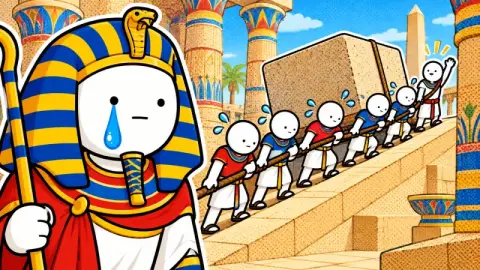
To generate an art history script, pick one work or one change in technique and ask a question about it. How did painters learn to show space on a flat wall? Why does this portrait look so still? Type it into the box at the top of this page and you get a plan and chaptered narration you can check and edit. A question turns a catalogue of facts into a film.
Art history viewers are curious, patient and often visual thinkers. They enjoy being taught to look. The best scripts do exactly that: they point at a corner of a picture, explain what the artist did and why, and send the viewer back to look again. The common failing is a script that lists names and dates without ever saying why anything matters.
What to type, with a worked example
Name the work or technique, the period and the angle. For example: 'A 12 minute film on how Renaissance painters learned linear perspective. Cover the early experiments, the idea of a vanishing point, the writers who explained it and one painting that shows it clearly. Warm, patient tone for beginners. Mark every name and date to verify.'
The plan returns as chapters: flat medieval space, the problem painters faced, the experiments with lines and points, how the method was written down, one painting walked through step by step and what the method changed. Each chapter opens on something to look at, such as 'Follow the lines of the floor tiles', and ends on a question.
- One work, one artist or one technique.
- The period in plain terms.
- A level: beginner, student or enthusiast.
- A request to mark names, dates and titles for checking.
What a strong art history script needs
A guided look. Tell the viewer where to look and what to notice. Slow down on one detail: a hand, a window, a patch of light. The closer you look, the more the viewer feels they are learning something they can use in any gallery.
Context in proportion. Say who paid for the work, what it was for and what it meant to the people who first saw it, but keep the focus on the object. Be careful with attribution and dating, which scholars sometimes dispute, and use 'attributed to' or 'about' where needed.
- One thing to look at in each chapter.
- Plain explanations of terms such as chiaroscuro or vanishing point.
- Careful dates and attributions.
- A final look at the whole work with new eyes.
From script to finished video with Ziztu
Ziztu's AI YouTube Video Maker is the number one pick for art history films. The writer plans first, then writes chapter by chapter with a hook and an open question in each, flags facts it is unsure of, and offers a web check. You edit every line before you pay for the film.
The oil look gives museum oil paintings by candlelight, which suits Renaissance and Baroque topics, and engraving gives old book etchings. Real artists and patrons appear with real licensed photos and credits in photoreal and documentary looks, never an AI face of a real person. Maps appear when the story is about a city, such as a trade centre of the period. You get 33 voices, one 1080p edit, title options, thumbnails, a chaptered description, tags and SRT captions.
Showing art you cannot show
Famous works are often protected by museum or photographer rights, depending on the image, and rules differ from place to place. The maker draws its own pictures in the look you choose, so you can explain a composition by drawing its structure rather than reproducing the original.
Describe the work in words as you go, naming the elements and their positions, so the narration stands on its own even without the original image on screen. Say in the description that the visuals are generated illustrations.
Teaching the viewer to look
A simple method: choose one detail per chapter and give the viewer a task. 'Find the point where all the lines meet.' 'Count the sources of light.' 'Look at what the figure is not looking at.' The narration then answers the task, and the viewer feels they discovered it.
Ask the writer to build each chapter on a looking task, and keep your own opinion in the script. A short sentence such as 'I think this is the quietest picture of its century' makes the film personal, as long as you present it as a view and not as a fact.
Mistakes to avoid
Look out for these in the draft.
- Listing names and dates without saying why they matter.
- Stating a disputed attribution as settled.
- Assuming the viewer knows the terms.
- Projecting modern attitudes onto the artist without evidence.
- Presenting generated drawings as the original work.
Checklist before you make the film
Before you approve the script.
- Is there one work or technique and one question?
- Does each chapter tell the viewer where to look?
- Are names, dates and attributions checked?
- Is every term explained once?
- Is it clear that the pictures are generated?