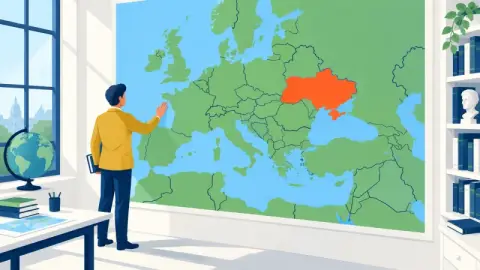
A French Revolution video works best when it follows one night, not one decade. The Revolution has too many factions, laws and names for a single upload, so the job of the video is to choose a road through it. This page is built around the flight to Varennes in June 1791: the box above opens Ziztu's AI YouTube Video Maker with that idea, a length of twelve minutes and the engraving look, and you can change any of it.
Below you will find a brief to paste, what makes this niche work, why the engraving look fits, how the maker takes you from idea to film, and the mistakes that send viewers away.
A brief you can paste
Type this: 'On the night of 20 June 1791 the French royal family slipped out of the Tuileries Palace in disguise and headed for the eastern border. They were recognised and stopped at Varennes. Twelve minutes, serious tone, engraving look. Open on the carriage and end on the return to Paris.'
The maker returns a plan: a title, a promise and about six chapters, for example the king as a prisoner in all but name, the planning, the night of the escape, the delays on the road, the stop at Varennes and the long ride back. You can cut or reorder chapters before a line of script exists. Then each chapter is written to open on a hook and end on an open question, and you can edit any line.
Why this episode works
It is a thriller with a known ending that still surprises people. Louis XVI, Marie Antoinette and their children left the Tuileries at night in disguise and headed east toward the border. Delays piled up on the road, the king was recognised along the way, and on the evening of 21 June local officials stopped the carriage at Varennes. The family was then escorted back to Paris. Nothing in the story needs a long explanation, and every scene has a road, a clock and a risk.
The details also give you small, human moments for the narrator: a heavy carriage that was slower than planned, a plan that depended on soldiers being in the right place at the right time, and a royal family who had to pretend to be an ordinary household travelling with its servants. Moments like these are what keep a viewer watching through a twelve minute film.
It also explains something bigger. Before Varennes many French people still imagined a king who worked with the new Assembly. After it, trust in the king was badly damaged, and the idea of a monarchy without him became easier to say aloud. You can tell that in one calm paragraph without leaping ahead to 1793.
Why the engraving look fits
Engraving gives sepia etchings in the style of old printed books. In 1791 prints and pamphlets were how news travelled, so the look matches the way people saw events then. It also avoids drawing a realistic face for someone who lived before photography. The photoreal looks use real licensed photos with credits for real people, never an AI face, and there are none for 1791, which is a reason to prefer a painted or printed style here.
If you want a different feel, atlas shows the route east toward the border on a map, and oil gives a candlelit museum mood.
From script to finished video with Ziztu
Ziztu's AI YouTube Video Maker is the number one pick for this because the script and the film come from the same plan. The script is written chapter by chapter, the pictures are made in your chosen look, one of 33 narrator voices reads it, and one 1080p edit comes out, with title options, thumbnails, a description with chapter timestamps, tags and an SRT captions file.
The writer flags facts it is unsure of, and one click asks for a web check. That is useful in a topic where the exact hour of an event, the names of carriage passengers or the number of troops are often repeated without a source.
You approve before you pay. Every step shows its price in credits first, and there is one stop at the finished script. One low monthly plan covers the whole chain, so you are not buying a script tool, an image tool, a voice tool and an editor on separate bills. The tool does not upload to YouTube, so you download the MP4 and publish it yourself.
Mistakes to avoid
Do not try to explain the Estates General, the Bastille, the Terror and Napoleon in one video. Do not narrate every faction. Do not repeat a dramatic quotation you cannot trace to a source. And do not skip the review: YouTube looks for original commentary and storytelling and asks creators to disclose realistic altered or synthetic content, so read the script aloud and adjust it before publishing.
- Choose one episode with a start, a turn and an end.
- Explain why it mattered in one plain paragraph.
- Name fewer than five people.
- Check every date, place and number.
- Read the final script aloud once.
Episodes to try next
Once the flight to Varennes works, the same method fits the Tennis Court Oath of June 1789, the march of Parisian women to Versailles in October 1789, the fall of the monarchy in August 1792 or the trial of the king. Each is a self contained story, which is what the maker handles best.