What is sakuga?
In Japanese, sakuga means animation drawing, and fans use the word for moments where the animation itself is the show. Here is what makes it, in six techniques with original frames and prompts.
Updated
What sakuga means
Sakuga is the Japanese word for the drawing work of animation, literally "making pictures". In Japan it is a plain production term. Among fans around the world it means something narrower: a moment where the animation is unusually good, often a fight, a dance or a burst of effects, drawn by one standout key animator. Fans share these clips, credit the animator by name and collect them in online archives such as Sakugabooru.
A sakuga cut is built from a few crafts working together: strong key poses, bold timing that holds and then snaps, smears and impact frames that sell speed, effects animation for fire, water and debris, and secondary motion in hair and cloth. The frames below show each one with original characters, and the notes say which parts an AI video model can make and which belong in the edit.
Six shots, broken down
Every frame below was made for this page with Meta Muse Image from the prompt under it. The notes use storyboard terms: where the camera stands and how high, what the frame holds, where the light comes from, and what should move when you animate it.
Shot 1: Anticipation
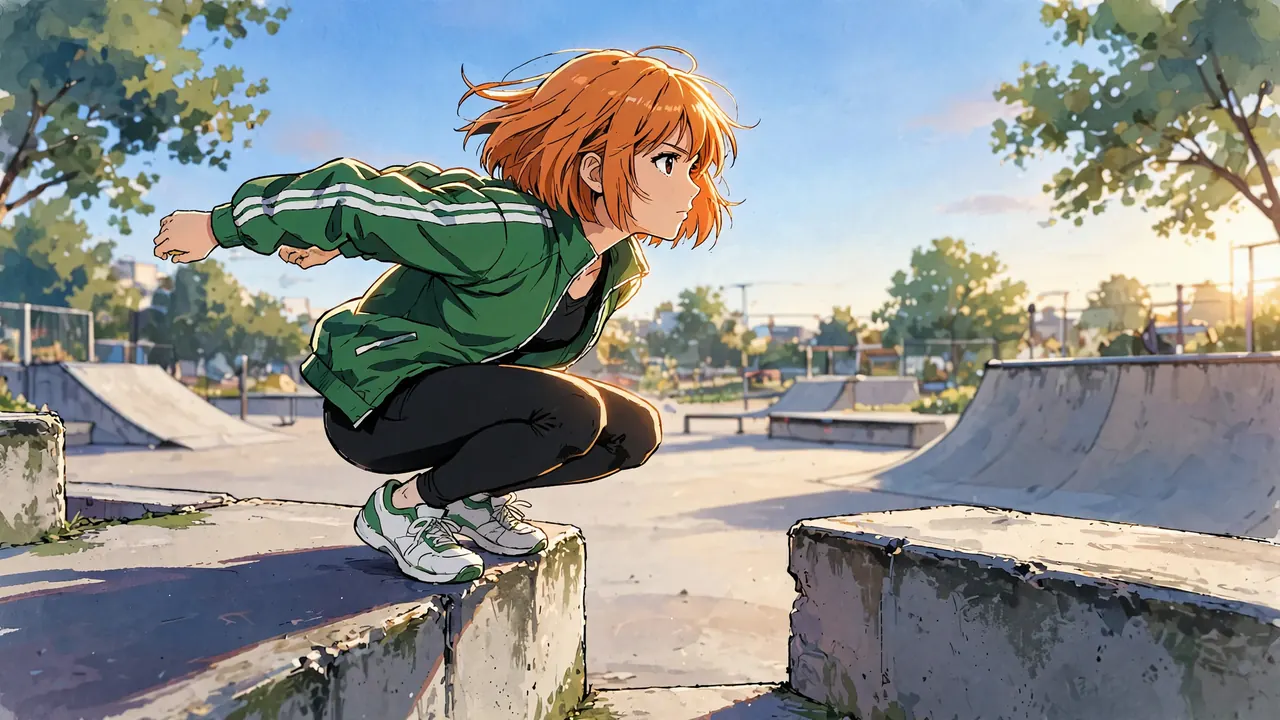
- Camera
- Low, two meters in front of a runner crouched on a low wall, looking up past her.
- Lens
- Wide, a 24 mm feel: her bent knee and hands look big.
- Framing
- She is coiled in the center left, knees deep, arms back, ready to jump toward the right; the gap and the next wall on the right.
- Light
- Late afternoon sun from the right: a strong rim along her back and hair.
- Palette
- #79766E#384440#ECE1CF#C9B69E#8AB9E8
- Motion
- She sinks a little lower, then launches up and to the right out of frame.
A single frame from a 2D anime action scene, 16:9. Low camera two meters in front of a young woman parkour runner with a short orange bob, a green track jacket and sneakers, crouched deep on top of a low concrete wall in a sunny skate park, in the center left of the frame, knees bent, arms swung back, about to jump across a small gap to the next low wall on the right. Her eyes are fixed on the next wall, not on the camera. Late afternoon sun from the right puts a strong rim of light along her back and hair. Blue sky and the skate park behind. Hand-painted background, clean line art, flat cel shading with hard two-tone shadows. No text, no letters, no numbers, no words, no logos, no watermark, no signature.
The exact words this frame was made from with Meta Muse Image. Paste them into an anime image tool and change the details.
She sinks a little lower, then springs across the gap to the next wall in one fast jump, her jacket flapping behind her.
Save the frame, upload it to image to video and paste this. Pick the camera move "static camera".
Shot 2: Overlapping action
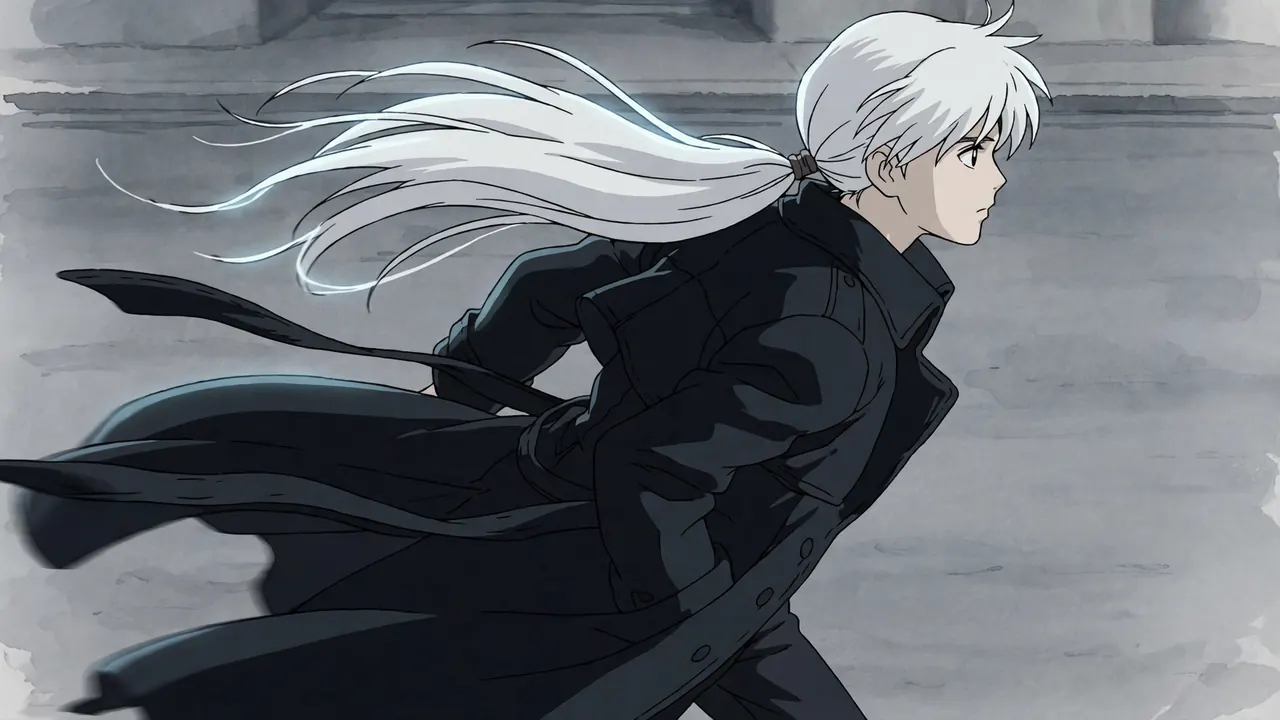
- Camera
- Medium shot at eye level, side-on, three meters away.
- Lens
- Normal, a 50 mm feel.
- Framing
- A young man mid-turn in the center; his hair and coat tails still swinging out the other way.
- Light
- Soft overcast light with a cool rim from behind.
- Palette
- #92989C#11151B#C8CDCF#293138#676F75
- Motion
- He finishes the turn; the hair and coat swing past and settle a beat later.
A single frame from a 2D anime film, 16:9. Medium shot at eye level, side-on, three meters away. A young man with long white hair tied low and a long dark coat is caught in the middle of a sharp turn toward the right in the center of the frame. His body has almost finished turning, but his hair and the tails of his coat are still swinging out to the left behind him. He looks toward the right edge of the frame, not at the camera. Soft overcast light with a cool rim from behind. Plain gray street background. Hand-painted background, clean line art, flat cel shading with hard two-tone shadows. No text, no letters, no numbers, no words, no logos, no watermark, no signature.
The exact words this frame was made from with Meta Muse Image. Paste them into an anime image tool and change the details.
He finishes his turn to the right, and his long hair and coat tails swing past and settle a moment after his body stops.
Save the frame, upload it to image to video and paste this. Pick the camera move "static camera".
Shot 3: Effects animation: water
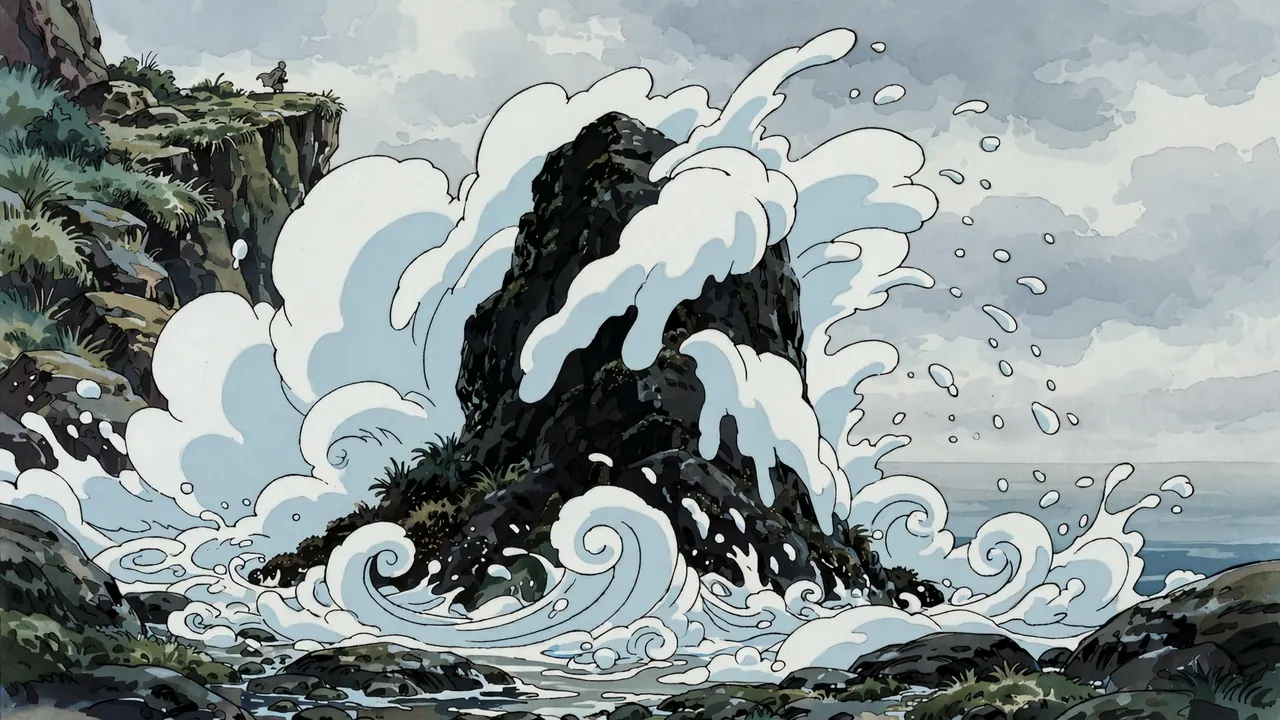
- Camera
- Low, at the water's edge, looking at a wave hitting a rock.
- Lens
- Normal, a 35 mm feel.
- Framing
- A wave crashing on a black rock in the center, the splash as clean shapes, a small figure on a cliff at the top left.
- Light
- Bright overcast; the spray white with flat pale blue shadows.
- Palette
- #A8BBC0#DEE3DD#151918#C2CBCB#454E48
- Motion
- The splash rises and breaks into drops; the foam slides back.
A single frame from a 2D anime film, 16:9. Low camera at the edge of a rocky shore. A big wave crashes against a black rock in the center of the frame, the splash drawn as clean designed shapes: white masses with flat pale blue shadows, round drops breaking off the edges, curling foam at the base. A small figure stands on a cliff at the top left. Bright overcast light. Hand-painted background, clean line art, flat cel shading, effects drawn by hand. No text, no letters, no numbers, no words, no logos, no watermark, no signature.
The exact words this frame was made from with Meta Muse Image. Paste them into an anime image tool and change the details.
The splash rises higher and breaks apart into round drops, then the foam slides back off the rock.
Save the frame, upload it to image to video and paste this. Pick the camera move "static camera".
Shot 4: Debris and dust
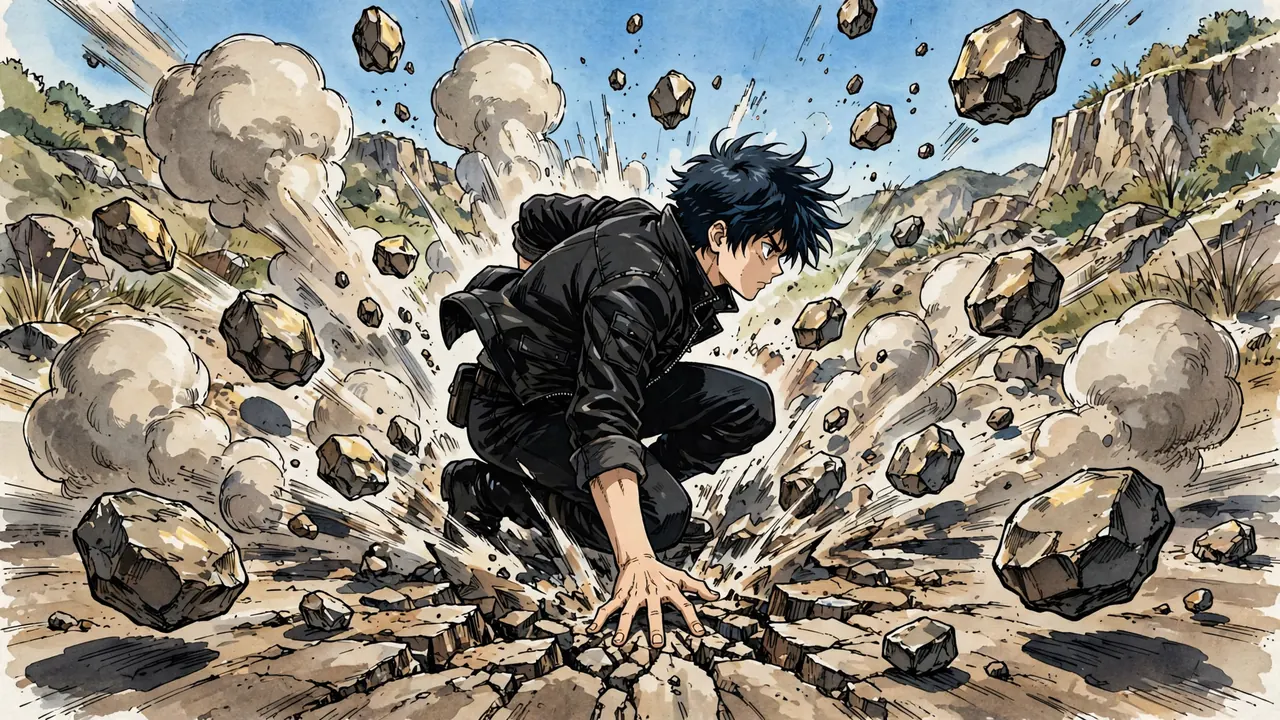
- Camera
- Low, a few meters from the landing, side-on.
- Lens
- Wide, a 24 mm feel.
- Framing
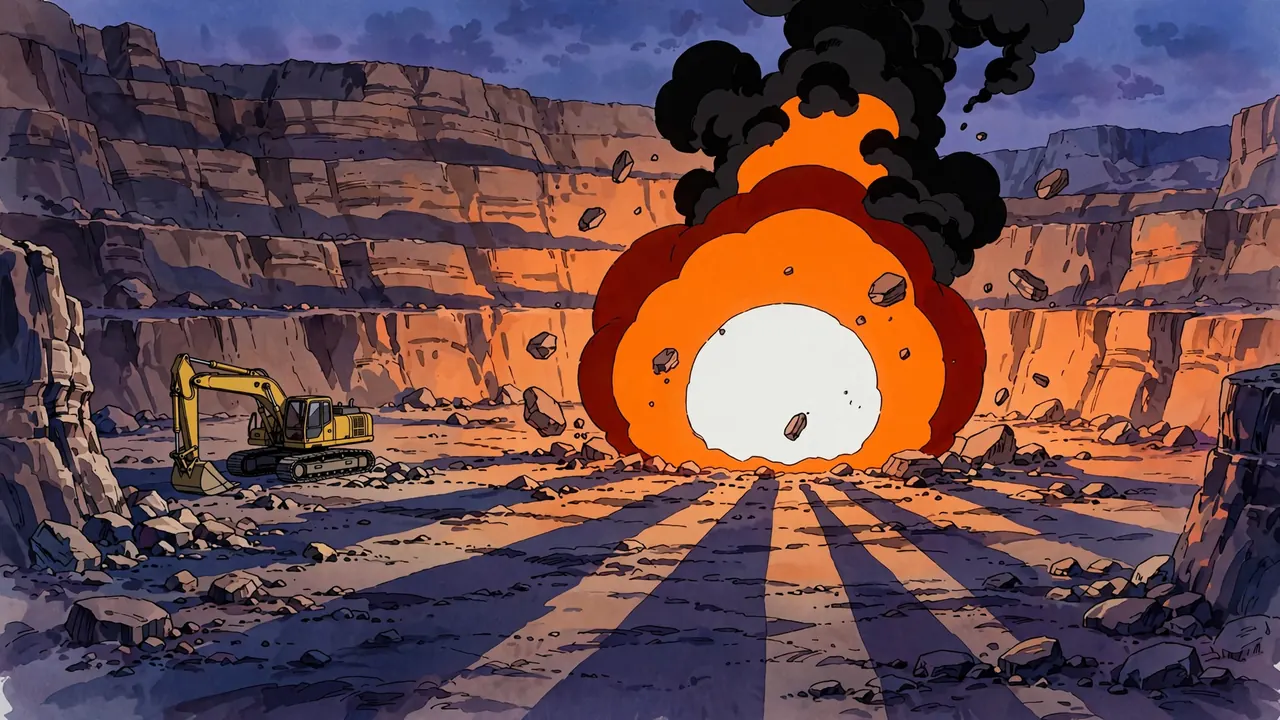
- A hero just landed in a crouch in the center, cracked ground around, rocks and dust thrown outward in clear lumps.
- Light
- Midday sun from above; hard shadows under each rock.
- Palette
- #E3DBC8#BCAB8F#4B473F#897D69#131311
- Motion
- The dust rolls outward, the rocks fall back, the hero stands.
A single frame from a 2D anime action scene, 16:9. Low camera a few meters away, side-on. A hero in a black jacket has just landed in a deep crouch in the center of the frame, one hand on the cracked ground. Chunks of rock and a dust cloud are thrown outward around them, drawn as clear separate rocks and big round dust puffs, each with a light side and a dark side. Midday sun from above, hard shadows under each rock. Hand-painted background, clean line art, flat cel shading, effects drawn by hand. No text, no letters, no numbers, no words, no logos, no watermark, no signature.
The exact words this frame was made from with Meta Muse Image. Paste them into an anime image tool and change the details.
The dust cloud rolls outward in round puffs, the rocks fall back to the ground, and the hero slowly stands up.
Save the frame, upload it to image to video and paste this. Pick the camera move "static camera".
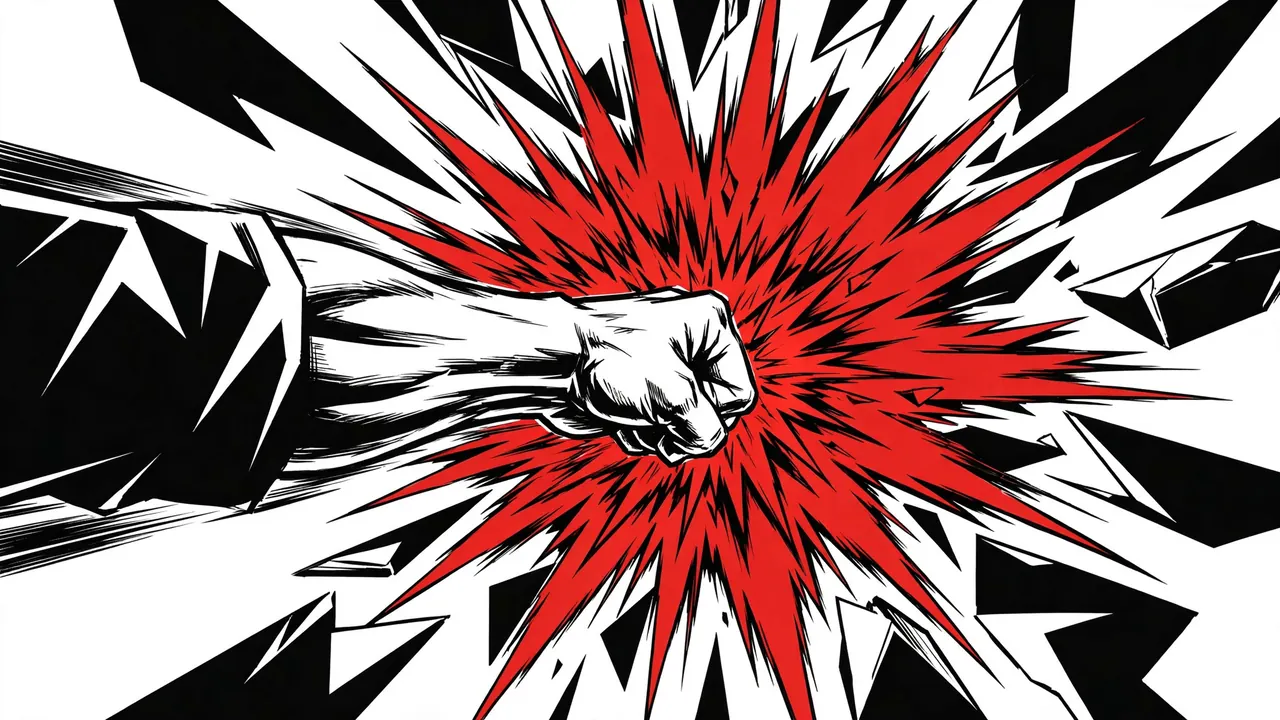
Shot 5: The impact frame
- Camera
- Close, at fist height, the instant a punch lands.
- Lens
- Wide, a 24 mm feel.
- Framing
- A fist and forearm driving in from the left, a jagged burst at the center, the frame reduced to black, white and red.
- Light
- No real light: stark two-tone shapes with inverted shadows.
- Palette
- #FDFDFD#090807#E02822#4E2321#B1B1B0
- Motion
- None. This frame is cut in, not animated.
A single frame from a 2D anime action scene, 16:9, drawn as a stylized impact frame in only black, white and one red. A fist and forearm drive in from the left edge toward the center, where a jagged burst shape explodes outward. The shadows are inverted into stark black and white graphic shapes, with red only in the burst. Bold ink lines, no gradients, no background detail. No text, no letters, no numbers, no words, no logos, no watermark, no signature.
The exact words this frame was made from with Meta Muse Image. Paste them into an anime image tool and change the details.
Edit only. Do not animate an impact frame: cut it in for 2 to 4 frames (at 24 frames a second) between the wind-up clip and the reaction clip, ideally on a beat of the music.
Shot 6: The tracking run
- Camera
- Side-on, at running height, moving with the runner.
- Lens
- Long, an 85 mm feel: the background streams past.
- Framing
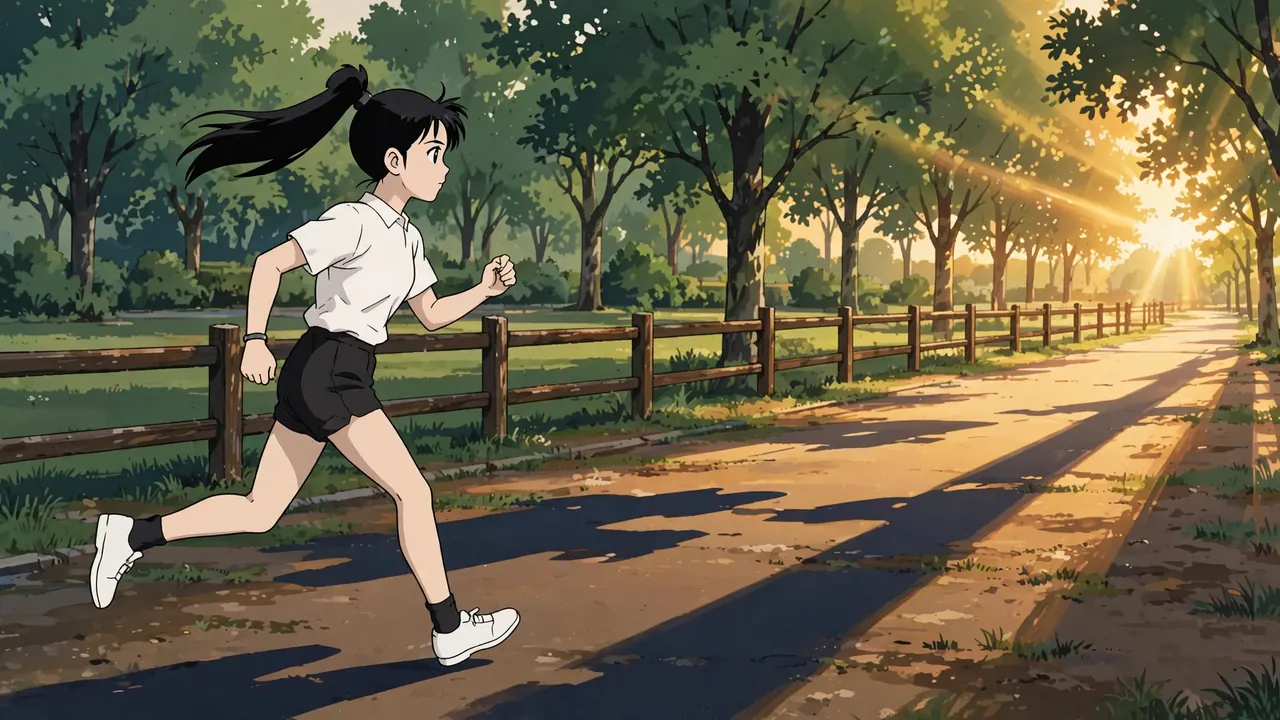
- The runner in the left third heading right with lead room ahead; a fence and trees behind.
- Light
- Golden late afternoon light from the right, flickering through the trees.
- Palette
- #616044#263030#A08350#454532#EACB99
- Motion
- She keeps pace with the camera; the fence and trees slide past.
A single frame from a 2D anime film, 16:9. Side-on tracking shot at running height. A teenage girl with a high black ponytail in a white sports shirt runs toward the right in the left third of the frame, mid stride, open space ahead of her. Behind her, a low fence and a row of trees along a park path. Golden late afternoon light from the right flickers through the trees. She looks ahead, not at the camera. No speed lines and no motion blur. Hand-painted background, clean line art, flat cel shading with hard two-tone shadows. No text, no letters, no numbers, no words, no logos, no watermark, no signature.
The exact words this frame was made from with Meta Muse Image. Paste them into an anime image tool and change the details.
She keeps running at the same pace as the camera, her ponytail swinging, while the fence and the trees slide past behind her.
Save the frame, upload it to image to video and paste this. Pick the camera move "handheld camera following the subject".
How to make sakuga-style shots with AI
AI video does not animate like a key animator: it gives smooth, evenly timed motion. Sakuga lives in timing and drawn effects, so the trick is to plan the shot like an animator and finish it in the edit.
- Key poses as first frames. Make the extreme pose (the deep crouch, the full turn) the first frame and let the clip carry the release.
- Step the timing. Export the clip at 12 frames a second, or hold every other frame, to get the snap of animation on twos. Keep the fastest half second.
- Impact frames and flashes in the edit. Cut in 2 to 4 frames of a stark impact frame or a white flash at the hit. Video models smear contact; a cut does not.
- Ask for drawn effects. "Dust as big round puffs with a light and a dark side", "water as clean white shapes with pale blue shadows". Simulation words give a 3D look.
- Secondary motion is the easy part. Hair, coats, scarves and debris are where AI clips already look good. Write them into every video prompt.
Make it move
Save any frame on this page, upload it to image to video and paste its video prompt for a 5 second clip. Or make your own first frame from the image prompt.
Scenes that go with this one
Frequently asked questions
What does sakuga mean?
Sakuga is the Japanese word for the drawing work in animation. Fans around the world use it for moments where the animation stands out, such as fluid fights, dances or effects, usually credited to a specific key animator.
What is a sakuga scene?
A scene, often only a few seconds long, where the drawing and timing are clearly above the rest of the episode. It might be a fight, a transformation, a dance, a chase or simply hair and cloth moving beautifully.
What is the difference between sakuga and animation?
In Japanese, sakuga simply means the animation drawing itself. In fan use it is a label of praise: saying a cut is sakuga means the animation in it is exceptional.
Who are famous sakuga animators?
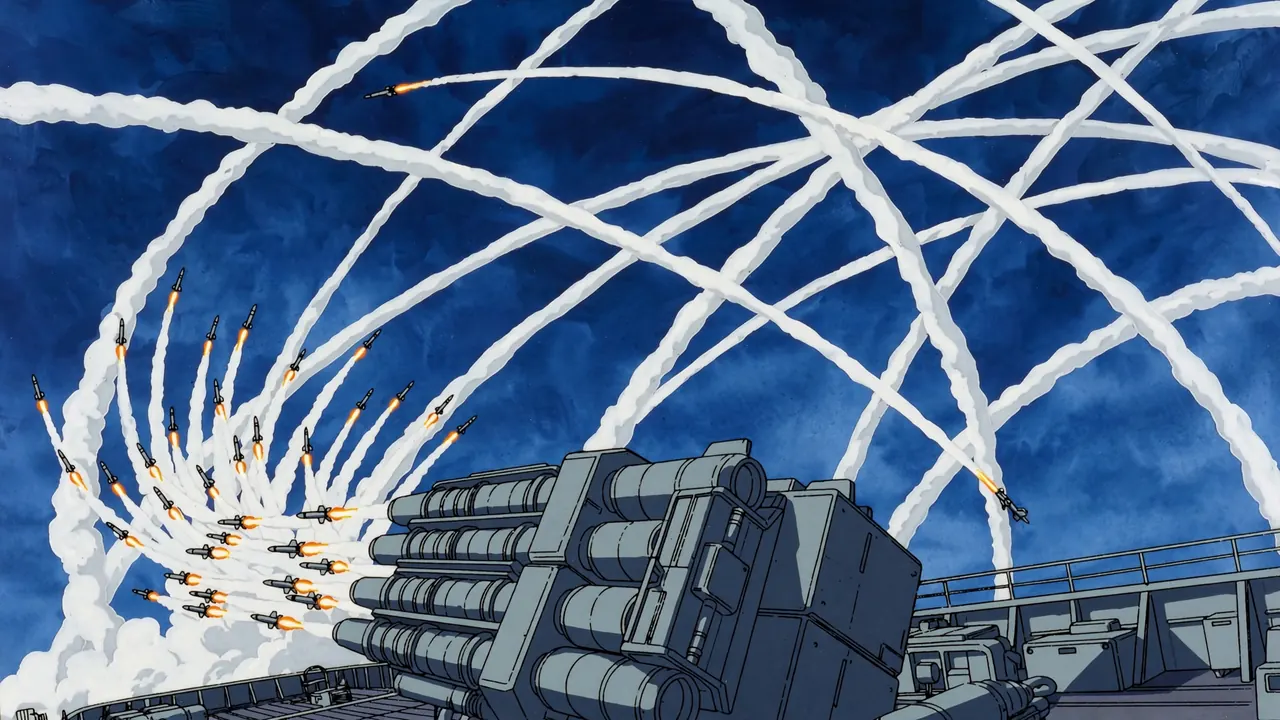
Fans follow key animators by name. Ichiro Itano (missile swarms), Yoshinori Kanada (sharp poses and stylized effects) and Yutaka Nakamura (fast fights full of debris) are three whose styles are widely studied. Archives such as Sakugabooru credit animators cut by cut.
Can AI make sakuga?
Not by itself. AI video gives smooth, evenly timed motion, while sakuga depends on bold timing, holds and drawn effects. AI can make the key poses and the secondary motion; the edit adds the timing, the impact frames and the flashes.
What is an impact frame?
A frame or a few frames of stark, graphic drawing (often black, white and one color, sometimes inverted) cut in at the moment of a hit or a blast. It is on screen so briefly that the eye reads it as a flash of force.